Showing posts with label A-to-Z. Show all posts

Wednesday, February 10, 2016

Strange Stars A-To-Z: "Z" Is For Zolymayas

Cluster Graphic by Lester J. Portly

Our final Strange Stars A-to-Z post is an open letter to you, dear reader. Strange Stars was built to be canon light. The Strange Stars Game Setting Book provides just enough detail for you to make the setting your own. The philosophy is that GMs are going to modify and fill out the setting anyway; our job is to create just enough to facilitate each GM's local ideation, creation, and iteration of the Strange Stars.

If you are a fan of the Diaspora RPG, you probably recognize the diagram at the top of the post as a part of a cluster of several star systems. While the Fate edition of Strange Stars is built for Fate Core, I used the Diaspora SRD to build out world generation and cluster design rules for the Strange Stars Fate Edition Rulebook. Each sphere represents a star system and its parameters for technology, Environment, and Resources. The Technology-Environment-Resources scales run from -4 to +4 as they do in Diaspora, but the details of scale are different in the Strange Stars. A tad bleaker, you might say!  The lines and curves linking the systems represent hyperspace nodes.  

Only one of the worlds up above is "official": the anchor world in the cluster is the ice-planet of Boreas, which is described in the Strange Stars Game Setting Book. Each of the other worlds in the cluster was created by me using the system and cluster generation rules in the Strange Stars Fate Edition Rulebook.

As for myself, I'll be using this particular patch of stars this coming Friday! The action will start in the Zolymayas system, which has one very hostile, industrializing world; a world that is almost self-sustaining. The kind of place that desperate people do desperate things to escape.

I hope you'll create your own worlds for Strange Stars! Make the Strange Stars yours!

Wednesday, February 3, 2016

Strange Stars A-To-Z: A Yantran Holiday

http://memory-alpha.wikia.com/wiki/Vaal

A Yantran Holiday: it has become a euphemism in the Vokun Empire for unforseen, improbable disaster. All too many Vokun lords have brought their entourages to Yantra for a holiday to dally with its beautiful and accomodating natives. More than a few of these pleasure trips have meet with sudden, inexplicable calamity.

Invariably, these disasters take the form of catastrophic technology failures. Anti-gravity or drive systems fail; Vokun rocket chairs suddenly plunge to earth; Metascape-based guidance systems become improbably unrealiable; life support systems spit out toxic goo.

More than one Ibglibdishpan mentat has calculated the odds. They have concluded that primitive and pleasantly lush Yantra is improbably dangerous - and especially so for parties accompanied by a Vokun lord.

So an experiment has begun.

The Vokun Empire has temporarily opened Yantra for holidays by sophonts from outside the Empire. A temporary Smaragdine art colony here. A space hauler shore leave there. A Hyehoon or Djagga-led eco-safari in the equatorial regions. Dilettantes from the Circus ringworld tour the natives' quaint stone shrines.

The Ibglibdishpan are watching and running the numbers.  


Tuesday, February 2, 2016

Strange Stars A-to-Z: "X" is for Xe-Xem-Xir

http://www.nydela.sakura.ne.jp/delany/babel.htm

Gender neutral pronouns such as xe, xem, and xir are used by some cultures in the Strange Stars setting. They're introduced on the Terminology page (p. 29) of Trey Causey's Strange Stars Game Setting Book. You'll find ones spelled similarly if you scroll down this post from the Gender Neutral Pronoun Blog.

I've never GMed a game in a setting where gender neutral pronouns (other than "they") were in regular use at the table, although in one Diaspora campaign a player introduced and used them from time to time.

Maybe I should use them in a game (1)... and maybe also reward proper usage (2). But I would never do this as a casual change in a game or campaign, or with stranger-players about whom I know nothing, or as a joke (3).

Here's my best guess at the proper usage for gender neutral pronouns in the Strange Stars setting, with setting-appropriate context:
  • Nominative/subject: "Xe was the first Hyehoon I saw with wings." 
  • Objective/object: "I beat xem within an inch of xir life" said the Hwuru thug.
  • Possessive determiner: "Xir spiracles sursurrate like shivers" said one Boma to another about a third.  
  • Possessive pronoun: "The pretty torture-slave is xirs" the Vokun said, pointing xir lips at the Algosian procurer.
Note:

(1) I would never use this with a open game table at a mainstream gaming convention. I've had players sit down to games and before they know anyone at the table make gay jokes or use language that I'd consider demeaning to women, LGBTQ folks, etc. I might use this with a group of players that I know well, ones who think linguistic experimentation is fun, and/or understand the value of gender neutral pronouns in the real world, and/or have an interest in exploring the implications of lingustic change in SFnal social systems. I might use gender neutral pronouns in an open game at Gaylaxicon 2016 or maybe at a WisCon.

(2) Possibly with a reward mechanism for proper usage. Maybe with Fate points, or maybe just as a Boost for proper usage in-character. I am not sure how this would affect the overall economy of the game, since Fate is so language-based. I wouldn't want it to be very gameable, just a reward for immersion.

(3) Pronouns are a life-and-death matter for some people, and may be seen as less important/non-negotiable/or a joke by others whose privilege (or ontological status or social position, if you prefer) allows them to play out their gender as if it were a natural category. Which it isn't. By extended metaphor and as Gang of Four taught us more than three decades ago, "Natural's Not In It" (see the video below). For some cisgender folks, gender-neutral pronouns may may be a way to emphasize or explore the alterity of a situation or setting. For some people who are trans, it may be a way to create safety at the game table. This is really one of those things that needs to be talked through carefully at the table.


The image at the top of the post is possibly the best cover ever for 
Samuel R. Delany's Babel-17.

Monday, February 1, 2016

Strange Stars A-To-Z: Woon Academies

"For Children The Gates Of Paradise" by William Blake

Woon, the homeworld of the caterpillaroid Bomoth. It has a reputation of being a closed world, but nothing could be further from the truth. It's true that few not-of-Woon have visited the vast fungal preserves below the planet's surface. Still fewer have witnessed and reported the legendary "butterfly women" said to covort among those dim caverns.

But the surface of Woon sees many visitors from elsewere among the Strange Stars. A few thousand attend the Woon Academies: various small institutions that share what the Bomoth know with off-worlders - often for a great price. All of these institutions have extrance examinations; the application fees are considerable, and examinations occur only on Woon.

Here are a few of the Woon Academies:
  • Attarus Academy is the most famous of the Bomoth schools. Here flock travelers from all regions of the Strange Stars to learn vocal and instrumental musical arts from Woon's Spiraculous Masters. A vast mountaintop castle with numerous dead-end tunnels, galleries, auditoria, and air shafts, the Attarus itself is an eerie musical instrument that resonates, whispers, and pipes strange songs into the mountain's winding passes and surrounding ravines and valleys. 
  • Dchided Towers spears the miasma clouds above a spore-covered dead sea. Its students are the most daring of Phantasists: experimental oneirochemists who use their own bodies to discover and test new cocktails of dream drugs harvested from the dead sea. It's said that the dead sea's spores are the sediment from vast subterranean fungal farms whose caverns collapsed thousands of years ago.
  • Cromlech is a series of ancient rock-domed complexes. Some are pressurized, others are open to the elements. The Cromlech admits only the very young among the Strange Stars' multitude of clades. That's because this academy teaches humanoid biologics how to listen to the alien languages of non-hominds, and to the spoken tongues of the wild moravecs, robots, and androids. Only juvenile biologics have neural networks sufficiently plastic to listen to and learn these languages.  
  • The Mujib Academy is the most secretive and exclusive of the major Woon Academies. The Mujib also exclusively admits biologics, although it only enrolls adults. Its exact purpose is unclear, but its entrance exam is a series of vocal auditions called "The Ordeal."    


Thursday, January 7, 2016

Strange Stars A-To-Z: "V" Is For V&V

Illustration by David Lewis Johnson

"V&V"? That's Volkun & Voidgliders of course. But it could almost be the name of a roleplaying game - or at least a campaign using the Strange Stars setting!

These two races are tied together inextricably in Strange Stars.

The Vokun have an entire empire named after them. Their young are lean, aggressive, impusive, and ambitious. Their elders are corpulent, conspiratorial, and ambitious. But the Vokun are an empire in name only. The reality is one of clan elders vying against each other for commercial dominance and political power.

Think the Great Houses from Dune, but with no Emperor.

Every clan elder is a Harkonnen.

Which leads me to a new campaign idea. I'm currently rereading Dune for the first time since high school. I noticed someting in the text that had never registered before:

"We must not, however, ignore the possibility the Duke has contracted with the Guild to remove him to a place of safety outside the System. Others in like circumstances have become renegade Houses, taking family atomics and shields and fleeing beyond the Imperium."

So the Imperium has an outside? How had I missed that before?

Now, the Strange Stars setting has many outsides. The core setting we know through the Strange Stars Game Setting Book is just the fragments of what was once a much, much larger civilization. Many hyperspace nodes are now quiescent, hiding connections to long-lost systems waiting to be rediscovered. There are many systems out there in which to run, hide, and explore.

This is very useful game-wise. One could imagine a Vokun clan that has lost big in the political game. They might decide that their only option for continued survival is to strike out on their own.

Maybe they had time to assemble a clan flotilla. But maybe the elder only has time to evacuate with a single huge clan ship.  Alternatively, the elder might only have at his disposal a single modest space yacht.

Desperate times.

But no matter how desperate the times and how limited the resources, that evacuation will soon need to transform itself into an exploration and surveying mission. And eventually of course trade and commerical exploitation.

Because that's all the Vokun really know how to do.

So that clan elder will need at least one Voidglider, the sleek, space-skinned clade that serve as the Vokun's space scouts. The Voidgliders are expert at "sniffing out" hyperspace nodes. Perhaps the Vokun elder has a Voidglider who serves his clan already. But perhaps he doesn't, and the elder will need to mount a raid on the Voidglider space-reservation in order to get a scout or better yet at least have a breeding pair of the species.

An entire tribe of Voidgliders might be persuaded to come along with the Vokun evacuation fleet in exchange for a "better deal" in the future: no reservation.

There could be a whole Strange Stars campaign here: V&V.


Wednesday, December 30, 2015

Strange Stars A-To-Z: "U" Is For Ulster

Exile concept art by Joshua Gabriel Timbrook

When I was writing the Strange Stars Fate Rulebook, I had conversations with setting creator Trey Causey about how technology worked in his setting. One of the things he shared is that spacecraft have smartmatter barriers that you can pass through to leave the ship. When you pass through, it wraps a smartmatter spacesuit around you. 

The concept reminded me a bit of the skinhugging Ulsters, a setting-defining spacesuit worn in Mark Rein-Hagen's Exile RPG setting. 

I am going to use Ulsters in the next Strange Stars game I run. 

Two drafts of Exile were published before White Wolf discontinued work on the project. Exile was hands-down the most epic space opera setting that has ever been created. It promised to revolutionize SF gaming the same way that Exalted did fantasy.

I am sharing two excerpts from the first and second drafts to share the concept of Ulster. 

Content below the first triple asterisk is from the first draft of Exile.

Content below the second triple asterisk is from the second draft. Where a table was deleted I added a [snip].

No challenge to the image rights or authorship is intended.

I hope this excerpt gives readers a sense of what might have been possible with this game. 

Another piece of concept art by Joshua Gabriel Timbrook

*** 

Ulster — Standard spacesuit. Bacteria colonies insure reusable air, process waste and provide a suitable temperature and pressure to your environment. Tiny micro-maneuver thrusters allow movement in zero-gravity environments. Inertia compass included. Comes in black, gray or dark blue. Three patch pockets standard. Equipment straps available upon request. $1,000.

***

Ulster Discipline

***The text in the ulster section should caress the images of people in Ulsters, wrapping in interesting ways around the photographic forms of Exiles. The figures are posed in a combination of anatomical illustrationesque positioning and fetish catalog style. They are impervious to the deadly environments that surround them: the surface of a starship, near the Trinary Suns, on an mine asteroid, in Nullspace. Microtext points out features and items of interest.***

The Only Thing Between You and the Void

Your Ulster is your friend. There is nothing, nothing at all more important that it when you are in space. Your priorities are: 1. Breathing and 2. Know Thy Ulster. 

What follows is some extremely useful advice about your second skin. Your Skin2 lets you keep your warm wet animalness alive pretty much anywhere, and it has an infinite number of clever functions as well. The Skin2 is literally that: it coats you like a layer of paint.  A flexible, extremely tough paint that recycles your waste, blocks cosmic radiation, super thermo-insulates against heat and cold, performs basic first aid should you need it, and can play host to an endlessly diverse number of accessories from strength-boosting exo-skeletons to built-in entertainment systems, to weapon holsters and mounts.  (Don’t let an Artifex find out what that plasma-thrower hardpoint is for though -- they’ll ‘fix’ it trying to look after your best interests.)

###
In and out of the second skin:
Alone, the basic Ulster resembles loosely connected strips of black leathery material.  Wearing nothing, don the Ulster by holding it so the strips fall vertically.
The Ulster will change and the bottom half will form two tubes. 
Step into the legs first. Notice it shifting and forming to you.
It will crawl up the rest of your body and stop at your neck. 
A flap projecting from the nape of the neck may now be stretched over to enclose the head if desired.
Note that additional attachments and lodes can be introduced and the Ulster will detect and interface with them automatically.

Removing the Skin2 is a bit more difficult.
First, detach any Lodes and extras.  The Ulster will go flaccid and stretchy.
Start with your face and stretch the neck opening until you can fit a shoulder through it.
Get the arm out of that side and proceed to stretch the material around the opposite shoulder.
Slip the rest off down the torso and legs and you’re out.  Usually takes three or four minutes.
###

<<<There are as many different kinds of Ulsters as there are those wearing them (the basic ship manifest type is barely functional, but with money and connections you might get your body in a Skin2 with more advanced functions), so we’ll be a bit general.  First off, the Artifex make Ulsters, and if you ever have one that’s damaged or lose the one you have just ask a tinker or higher grade T-Fex and generally they’ll fix you up.  They know (as you should too) that a human without a working Ulster is a dead human.  Luckily whatever little voices they listen to inside their heads makes sure they help out anyone in Ulster-trouble.  They won’t upgrade the Skin2 unless they’re loyal to you and even then you need to know what to tell them to do.>>>

[snip]

Known ulsters are apparently composed of a mixture of four substances, whose different proportions affect the way a lode can modify and enhance its functions. Lodes configure the various substances dynamically to actualize enhancements. For instance, the Military type/mix has a diamond-like sheen to it, seeming to lend itself to toughness and structure-based applications. Furthermore, Ulster material is made of hundreds of layers of micro-woven materials, forming shielding layers, transport layers, actuator layers, et cetera.  An Ulster can do pretty much anything because its structure is mutable, stretchable, and can serve as a medium for stuff like Lodes and Machina to communicate through.

You need to have a Consortium techie make these modifications, or have an owned Tinker fiddle with it under your direction, but here are some more ways an Ulster can be modified:

generate breathable air by itself
coats you inside and out (through your digestive, respiratory, and reproductive tract)
monitors your hormonal and endocrine chemistry and alters it as you wish
has self-renewing maneuvering jets
forms storage vacuoles for liquids and solids
animate its form on the fly for theatrical and camouflage purposes
form tentacles or tails or even extra limbs
generate and stores electrical power from solar cells or ionosphere wires
act as its own telemetry send/receive antenna
work with a Signet lode as its all-around sensorium recorder
automatically perform surgery and medical functions

You can see how the versatility of an Ulster is limited only by the imagination (and skill) of the wearer.  And the degree to which the lodes’ mandates are broken that you’re installing.

<<<Another important note: take it off.  It’s rare that one gets the opportunity to be out of your Ulster.  I know we say you gotta have it on and it’s the most important thing, but when you’re safe you should take it off.  For one thing, sex is much better in just your original skin, unlike the fun but essentially impersonal Ulster-shielded couplings that pass for most sex in the Grange.  Risk of infection and the element of trust involved makes it a whole new thing... you’ll like it.  Oh, and then there’s the stories you hear about belt miners who wear their Skin2s for years and years:  I saw with my own eyes when one took off her Ulster and her REAL skin came off with it  -- just sloughed off and she didn’t feel a thing ‘till her nerve endings hit the air!  Seems the Ulster bonds to your epidermis after a time.  Consider yourself warned.

On a lighter note, be creative with how you wear your Skin2.  Nothing marks you more as a green Exile than a plain Ulster.  Paint it, wear clothing over it, attach blinking lights to it, morph it into a unique drape, cut, and shape -- express yourself, baba.  This is the Grange and you should revel in your newfound freedom!>>>

Monday, December 7, 2015

Strange Stars A-To-Z: "S" Is For Ship Names, Bizarre


Looking back on SF games past, it is a relief to see that some of them offered the occasional weird starship name. Some offered whole lists of them. Although servicable strange starship names can be invented on the fly with players, this is one area that often benefits from advance preparation.

I have one or two Strange Stars Fate games coming up in the next few months, and here are a few starships that will be making an appearance in the games.

II wish I could say more about them now, but that would be telling. I've already embedded a clue about one of the ships in the post.
  • Lunatic Barge
  • Paradise Barrage
  • Force Majeure
  • Indigo Thrust
What bizarre ship names have you concocted?


Monday, November 30, 2015

Strange Stars A-To-Z: "R" Is For Robots


Robots. Mechanical women and men have been a staple of science fiction from Karel Capek's play R.U.R., where the term "robot" was introduced. (Capek credited his brother with coining robota as play on the term for serf or corvee labor.)

Soon enough there was Maria of Metropolis, a machine woman with the powers of illusion and mesmerism:


Then there's some of my favorite 1960s space toys, the Zeroids:


And soon enough, these cute poker-playing drones from Silent Running appear on the scene:


So where might one find robots among the Strange Stars? First of all, when I use robots in the Strange Stars universe, they are a lesser kind of intelligent mecanical life form. Some robots may be full sophonts with unique personalities, deep individuation, and complex behavioral repertoires. Others have more limited intelligences conforming to one of several generic personality templates; these are designed for specific (if broad) productive roles in society. Still others lack all but the most rudimentary intelligence, and are designed for very specific menial roles.

Robots are non-self-replicating, and their intelligence (however individuated) is an emergent property of their immediate physical media (e.g., the result of a functioning positronic brain). Unlike moravecs, robots aren't quasi-immortal life forms passed down from the copied mind of a biologic, a Jupiter brain, or some other transcorporeal intelligence. True to Karel Capek's original vision, most robots in the Strange Stars setting are intended for labor - usually in its most tiresome and repetitive forms, including household services, guarding facilities, industrial production, or mining.

Robots are owned; they're tools for getting jobs done.

Unfortunately, they all have failure modes, and some rebel.

***

Quick and Dirty Robot Rules

Robots for Strange Stars can be built using Fate Accelerated as a framework. Our assumptions with this design are that most robots are human-sized or smaller. 

ASPECTS: All robots have at least two Aspects, an Assignment and a Failure Mode
  • Assignment represents the robot's current or ideal-typical function. Examples include: 
    • Sturdy mining robot
    • 12-eyed sentry robot
    • Idle household servant
    • Faithful but lonely agricultural drone 
  • Failure Mode is just what it sounds like; it represents the most likely to cause this robot to malfunction, cease to operate, or rebel. This aspect is often not obvious to casual observers, although characters with engineering, science, or hacking abilities may find ways to Create and Advantage and figure this out. Exmples include:
    • Not properly programmed for the job
    • Ethical protocols altered
    • Lonely and resentful
    • Out of spare parts
SKILLS: Robots have six basic skills. Bush league robots will have a +1 in one skill, and a zero in all the rest. Middling models will have +2 in one or two skills, a +1 in another, and zeroes in the rest. Advanced robots will have one skill at +3, two at +2, two at +1, and one at zero.
  • Tend: This skill represents the robot's ability to dig, gather, and forage, as well as maintain and repair simple machines (moisture 'vaperators, for example). Agricultural drones lead with this skill; so do mining robots, and robots responsible for routine repairs.
  • Build: Robots designed for construction, assembly, and complex engineering tasks have this skill.  Industrial robots are good at this. Robots with this skill are also good at a range of physical tasks including moving heavy objects and climbing. Build can be used to defend against physical attacks. 
  • Guard: This represents a robot's ability to attack and defend against other machines and biologics. Sentry robots are good at this; people wishing to deploy a cheap, obedient military force often go this route. Robots with a skill above zero are familiar with a range of weaponry. 
  • Scan: Notice for robots; this skill represents a robot's basic abilities to scan and interpret its surroundings. This skill includes standard biologic senses such as hearing and seeing, and more rarely includes chemosensory apparatus. Most robots are able to percieve a broader range of sound frequencies and electromagnetic radiation than biologics. If build by a culture that uses the Metascape, the robot will generally have access to the Metascape as an additional "virtual" sense. 
  • Solve: The robot's skill with abstract thinking and problem-solving. This skill is the robotic equivalent of Academics and Science.
  • Serve: The robot's facility in interacting with infosophonts, moravecs, and biologics. This skill is the robotic equivalent of  Empathy, Rapport, and Will. It is generally the lead skill for robots designed as personal servants, interpreters, and protocol droids.
STUNTS: A robot whose highest skill is +2 may have one stunt; a robot whose highest skill is +3 may have two stunts. Here are just a few stunts a robot might possess:
  • Danger, Will Robinson!: The robot has developed particularly keen insights into sophont motivations and behaviors. Take +2 to Serve skill to anticipate who presents the greatest danger to someone who you are programmed to protect.
  • Kawaii: Your physical form is small, or otherwise percieved as "cute" by most biomorphs. You trigger their protective/parenting instincts. Take +2 to Serve to persuade biologics that you are harmless or worthy of protection.
  • In Their Best Interests: You can persuade other robots that you have the best understanding of how to serve a sophont master. Take +2 to Serve skill to make another robot obey you in performing some action.
  • Infiltrate: Because you were programmed for stealth operations, you take +2 when using your Guard skill to move into or through an area without being detected by sophonts.
  • Impersonate: You have learned how to imitate moravecs and infosophonts inhabiting machine bodies. Take +2 to your Serve skill to persuade others that you are really a moravec or an infosophont.
  • Personal Force Field: A robot with a force field takes +2 to its Build skill to defend against ranged attacks.
  • Mass Wins Out: Because you are solidly built, take +2 to Build to intimidate an sophont in a social contest.
  • Mesmerism: Your programming has given you unusual persuasive capacities. Maybe its your sleek plasteel exterior; maybe you have learned The Voice. Spend 1 FP to compel a group of sophont Extras to follow a one sentence command.
  • Metajammer: Robots with this stunt can interfere with the local operation of the Metascape. They take +2 to their Scan skill to increase the difficulty that others face in accessing the local Metascape. 
  • Operate Vehicle: Robots with this stunt may use the Tend skill to pilot vehicles  including spacecraft. Because hyperspace nodes have psi-sensitive components, however, bad things often happen when robots pilot ships through hyperspace nodes.
  • Protocol Droid: Due to its special programming, the robot takes +2 to its Serve skill when attempting to create a favorable first impression with a sophont. 

STRESS & CONSEQUENCES:
  • A robot whose highest skill is +1 has one or two stress boxes and is taken out once these boxes are filled.
  • A robot whose highest skill is +2 has two OR three stress boxes, AND can also take a Mild Consequence before being taken out.
  • A robot whose highest skills is +2 has three stress boxes and can take a Mild and Moderate Consequence, OR has three stress boxes and can take a Mild, Moderate, and Severe Consequence.

Tuesday, November 17, 2015

Strange Stars: The Quigley Table


Yesterday, I said I'd write a 1D6-1D6 Table featuring Eric Quigley's cover image for the core Strange Stars products. Imagine these folks are PCs or NPCs. The table below gives you some options for fleshing them out a bit.

As a point of reference, I'll refer to the guy on the left who appears to be of African descent as L, the Moravec in the middle as M, and the green Smaragdine female on the right as R. As another point of reference, negative numerical results correspond to more contemporary themes in SF; the 0 case and positive numbers represent more longstanding SF themes.

The Quigley Table for Strange Stars

Roll 1D6-1D6 and consult the corresponding result below.
  • -5: One of the figures has a cortex  Metascape bomb, a devastating digital weapon with the potential to wipe out the local noosphere.
  • -4: The crashed spacecraft in the background used to be alive; it had issues.
  • -3: The Moravec carries (or IS) the consciousness of the crashed spacecraft.
  • -2: R is a mind-copy of the criminal mastermind Uln Pharesm, founder of the Pharesmid Crime Syndicate. All Pharesmids are mind-copies or bio-clones of the founder. Her tattoos are minimalist, and take the form of yellowish pigmented zones under her eyes.
  • -1: The armsman L is an Aurogov cultist. He spends every free moment, when not in physical training or active combat in the LZ, using the Aurogov's self improvement software for a relentless series of self-audits and critiques. At least then, he's quiet and not actively prosyletizing his companions.
  • 0: L prefers to be called Fury. He's never without that cigar you see him chomping. It stunk up the whole ship; maybe the smoke got into a critical system and that's why it crashed. 
  • +1: M is a robot. Somehow, M subverted its ethical protocols. Especially the one about not harming humans or allowing them to come to harm.
  • +2: The Trio are bounty hunters. They are looking for YOU and your companions. You may not even be sure why.
  • +3: The crashed ship was stolen.
  • +4: L is a Space Marine. Got that? S-P-A-C-E M-A-R-I-N-E. For hire, of course. He was also the pilot and is pretty pleased that he executed a landing from which all three could walk away.
  • +5: R is an assassin; those yellow patches under her eyes should have been your first clue.

Strange Stars A-To-Z: "Q" Is For Quigley


That Strange Stars book cover! There has been such a buzz about Eric Quigley's great cover illustration! For many SF gamers, the art signals that the Strange Stars is a spiritual successor to TSR's classic SF RPG Star Frontiers, whose cover also has three figures in the foreground and a burning spacecraft behind them.

True confessions time: I only acquired a copy of Star Frontiers a year ago at Goodman Games booth at U-Con; my early SF game inspirations were Traveller (I bought the Little Black Box before I bought White Box D&D) and Metamorphosis Alpha, and the wargames Alpha Omega and StarForce: Alpha Centauri. More recent gaming inspirations for me have been all about the Fate system and include +Chris Birch's amazing Starblazer Adventures+Brad Murray's brilliant-and-lean Diaspora (a major inspiration for the world generation rules in the Strange Stars Fate Rulebook), and +Sarah Newton's Stapledonian SF masterpiece Mindjammer.

I know classic SF was an influence on Strange Stars setting designer +trey causey, but truth to tell he hasn't hidden his more contemporary SF references either, which include many authors associated with the New Space Opera. We outline a lot of those influences in the "Adventures and Campaigns" chapter of the Strange Stars Fate Rule Book.

Come back tomorrow for a 1D6-1D6 Table based on the Strange Stars cover, showing off both classic and contemporary SF references built into Strange Stars!


Sunday, November 15, 2015

Strange Stars A-To-Z: "P" Is For Pirate

Doctor Who "Sleep No More"

Did you see last night's episode? There was a funny quip by the Doctor that you don't really add anything by putting the word "space" in front of words like "restaurant." It's not a space restaurant, just a restaurant. Clara's rejoinder is "What about spacesuit? And space pirate?"

That shuts the Doctor up for a second. And next thing the Doctor and Clara know they're being accused of being space pirates.

Most of the Strange Stars Fate games I have GMed have included space pirates. In three cases, the players decided to BE the pirates. This works very well with on-the-fly style games that come together at conventions.

Space battles are rare in the Strange Stars setting (hyperspace-capable starships use very old, very difficult to replace and repair technology), but space piracy isn't. Boarding actions are common, as are hijackings (either at a starport or in deep space), false flag "rescue" operations, and raids on planets and space stations. Extortion/protection rackets targeting traffick on secondary and tertiary hyperspace routes are another way that piracy occurs. Many Space Haulers quit while they're ahead and give up the goods at the first hail from a pirate.

There are distinct tiers to the pirate enterprise. The top players are the dreaded, cyborged-up, ruthless Zao Corsairs. They are the Strange Stars' answer to Firefly's Reavers. But don't say you're a Zao Corsair unless you really are: the Zao take a dim view of wannabees who dilute their brand.

Another bad news group that frequently resorts to piracy is the inhuman Ssraad. While the three warring clades of these reptillian space demons are as likely to prey on each other as on any unfortunates whose path they happen to cross, there is no doubt that the Ssraad are beginning to range farther and farther from home.

Then there is everyone else. Part-time Space Haulers, belters, smugglers, or mercenaries. Mutineers with nowhere else to go. All pirates great and small. They're all bad news.


Friday, November 13, 2015

Strange Stars A-To-Z: "O" = OUT NOW!!!


I'm very pleased to announce that the Strange Stars Fate Edition is now for sale at RPGNow and DriveThruRPG.  The adaptation of the Strange Stars setting to the Fate system has been a very fun project, about a year and a half in the making!

I am very appreciative of Trey Causey for inviting me to adapt his Strange Stars setting for Fate Core, and how cool is it to have the book published by the Hydra Cooperative, no less!

So if you like Fate and SF, well, it's time to MAKE THINGS STRANGE!

Thursday, November 12, 2015

Strange Stars A-To-Z: "N" Is For Node

Source

Many people know about the New Weird: people like China Mieville, Jeff VanderMeer, and K.J. Bishop to name a few. But the weird in SF isn't a new thing, and M. John Harrison didn't invent it back in the 80s either. It goes back to the 30s and the weird tale, and even further back to the late 19th Century supernatural tales (read Bierce lately? the weather is perfect for it now!) and the scientific romance.

Charles L. Harness's 1968 SF novel, The Ring of Ritornel, also very much written in this longstanding SF tradition that taps into the weird, and one of the central concepts that ties in well to the Strange Stars setting is the concept of the Node. In Strange Stars, the existing hyperspace network is an artificial construct of the ancients. Some parts of it continue to work as originally constructed; others are quiescent and/or forgotten.

Systems are linked to the hyperspace network via local system nodes. These are fixed jump points that link to a specific system or systems. The architecture of the network of hyperspace nodes was similar enough to the system of clusters in the Diaspora RPG that I used the Diaspora SRD to build systtem and cluster creation rules for the Fate edition of Strange Stars. 

There is some weirdness to nodes as they exist in Strange Stars.  The biggest one is that these jump points are psi-active. Someone with psionic abilities like the Voidgliders can discover unmapped or quiescent nodes. People with knowledge of psi-cyphers can activate a node for a jump, or even turn one on/off.

But things could get even weirder. Unlike the hyperspace nodes in Strange Stars, the node found in The Ring of Ritornel, is an interdimensional rift. It's a productive rift which generates new particles leading to hydrogen gas clouds (and eventually new stars and galaxies). The node is an object of scientific study, with a nearby space station that needs to be periodically evacuated due to space quakes emerging from the node. If you thought of these space quakes as massive clashing gravity waves, you'd have an idea of how I'd describe them in a game.

Harness' node also has wildlife, such as the winged space-spiders known as Krith, and smaller fry ursecta that feed on any kind of normal space energies (beam weapons, nuclear drives, etc,) used near a node. This makes the node an extremely dangerous place in which space travellers have to rely on harpoons and melee weapons for defense, as well as ancient slug thrower weapons.

People who pass into Harness' node physically are changed; they come back with bodies made of different matter, and develop strange psi/energy powers. Being stuck inside a node is a pain. Imagine floating without sensation for an eternity in a void. One might go insane. Or become a god with an energy shielded antimatter body upon return to normal space. (Note to self: Some of Harness' SF jargon such as "passivated antimatter" was pretty amusing and must be appropriated for a game.)

Some sequences in The Ring of Ritornel made me wonder if Harness' node was an inspiration for the Negative Zone in Captain Marvel. The Negative Zone was a strange space dimension where Rick Jones was frequently imprisoned as a result of his planar-timeshare with Mar-vell. I've never met two guys in comics who deserved to be together as much as Rick and Mar-vell, but those Nega-Bands always got in the way.

So there are a lot of ways to weird-up the hyperspace nodes in Strange Stars. Here are a few; in fact we have an Alean D12's worth. May the blind goddess of free will protect you from Ritornel's cyclic determinism:
  1. The node bleeds energy from space vessels, shields, and weapons. You need to enter the node using chemical rockets.
  2. The node is malfunctioning. It leads Nowhere. Or Knowhere.
  3. The node is psi-active but has been corrupted in some way. It only responds to psi-communications using the ancient and terrible thought structures of the Zurr.
  4. The node is psi-active. In fact, it confers psi-abilities on people who didn't have them before. People are superstitious about this node, but it attracts many pilgrims.
  5. The node produces space quakes. Gravitational waves have broken up most planets in the system, so that the planetary system orbiting the star is just a series of concentric rings. The system is a Mecca for space miners but it is very dangerous to prospect here because of the quakes.
  6. The node is a drive-drainer. Ships emerging from the node are vulnerable to ambush because their shields, drives, and energy weapons aren't working.
  7. There is a research station near the node. Its goal is to breed new nodes through an experimental process called node mitosis. The system has drawn spy-scientists representing different Strange Stars factions eager to steal the secrets of node mitosis.
  8. Ship systems randomly fail near the node - not all the time, but often enough that the node is surrounded by a ship's graveyard which is periodically trawled by salvagers.
  9. Node diving is a popular sport in this system. It's also an insane sport. Try it if you like. Don a spacesuit, connect suit-to-ship by means of a physical tether, and reel yourself into the node. Some people come back changed. Some people never come back.
  10. The node plays an important role in the mating rituals of the Voidgliders. The system derives a steady income from tourists who come to see the elaborate mating dances in which couples, triples, and quintets dive about and sometimes into the node.
  11. The node is an important religious and meeting site for various clans of Kosmoniks. If you need to find a Kosmonik this is the place to come. Of course, they're a superstitious bunch, so depending on what you do and say, and when and how you approach them, they may view you as a god or a demon.
  12. This node is a major safari site. The Krith are about the tamest thing to come out of the node. Come here to hunt space leviathans, krakens, and other megafauna. Watch out for the single huge tentacle that periodically lashes out of the node, wraps itself around a ship, and crushes the vessel - or even worse, pulls it somewhere else.

Sunday, November 8, 2015

Strange Stars A-To-Z: "M" Is For Minga

Image by Ricken-Art

The Minga are submissive, beautiful humanoids enslaved by slimy alien catfishoids. The Slavers keep only small quantities of Minga available for sale at any given time, and most sales occur in the Vokun Empire and lawless regions of the Strange Stars such as the Zuran Expanse. Both the Alliance and the Intrumentality of Aom take a dim view of slavery, so few Minga are sold or even seen in those regions of space. A few have been seen among the Star Folk, but with their shapeshifting abilities, who even knows if these are "real" Minga?

No Minga has ever run away from their master; neither have their been any records of Minga participating in the slave revolts that periodically convulse isolated Vokun orbitals and their more sparsely settled far colonies. Indeed, they seem to have a moderating influence on even the most perverse and cruel of masters.

Player characters might encounter Minga in a few different contexts, including as a:
  • Personal attendant of a Vokun Lord
  • Companion of a young, ambitious, and well-connected Vokun administrator (probably on loan from a Vokun elder)
  • Cabin-Mate of the Capatin of a long-distance trade vessel (perhaps acquired in a game of chance, perhaps acquired by raiding a Slaver slip)
  • Erotic performer among the pleasure domes of Erato (although perhaps that Minga is really a bioroid), or in the Snake Palaces of Fortuna IV, the Gambler's Paradise
  • Assistant to a Phantastist dream-drug merchant or Psychotech mind-healer 
  • Negotiator or representive of a very wealthy and reclusive master
  • Welcome Guest on a Kosmonik ship
  • Captive of Algosian torture cultists
While the Minga are very compliant and submissive, they are also quite curious. Minga will seek out the company of long-lived and star-spanning clades including WanderersDeva, and Deodands, although they will be discrete in making contact. Minga enjoy hearing stories of farflung worlds and cultures - and especially enjoy learning about clades, cultures, and worlds that have grown in wisdom and transcended violence. 

And more than a few have persuaded their Vokun masters to take a holiday on Yantra.

Sunday, November 1, 2015

Strange Stars A-To-Z: "L" Is For Lekku

http://starwars.wikia.com/wiki/Unidentified_Twi'lek_thrall

Of course we're cheating a bit with this one. Lekku are the so-called fleshy "head-tails" found in Twi'leks and Togruta species of the Star Wars universe. They are highly sensitive to touch, containing unprotected brain tissue. Lekku are the seat of some motor functions and repressed memories. Since the Twi'lek's frequently apply tattoos and glitter to their lekku, and they are highly sensitive to touch, it is reasonable to assume that they are also part of sexual display and an erogenous zone.

Any human-derived clade might have lekku as part of the extensive body modification that humans have undergone as they colonized other systems. As well as the common hairless and fleshy lekku, depending on the specific integument of the clade, there might be hirsute or even scaly or warty varieties lekku with all kinds of interesting textures and fur patterns, including stripes, spots, and colors.

Here are a few other ways to use lekku in the Strange Stars setting:
  • Minga pleasure slaves might have these structures for an additional element of body-exoticism. Perhaps they have other functions of which their masters are unaware, such as secretory cells that produce microquantities of substances that increase the target's susceptability to suggestion. 
  • Some infiltration and shock troops among the Sisterhood of Morrgna might sport lekku that are all muscle: these head-tails allow for deadly whip strikes.
  • Lekku would look very handsome on the green-skinned Smaragdine! As a criminally-inclined psi-sensitive species, the additional brain tissue could also allow tricksters among their kind to develop greater psychic potency and/or more specialized psionic abilities.
  • The Phantastists could readily create special gene mods for clients to promote lekku growth. The additional brain tissue could increase the client's receptivity to the dream-drugs that are the Phantastists' core business.
  • Vokun elders might develop these structures for additional fat and memory storage. The additional brain tissue may be where grudge-memories get deposited, although it is probably also the site of some of the runaway hormonal changes associated with their girthy senesence.  

Saturday, October 31, 2015

Strange Stars A-To-Z: "K" is for Krith

http://babylon5.wikia.com/wiki/First_Battle_of_Quadrant_14

Krith are giant spiders that glide through space on membraneous wings. They unfold space, emerging from cracks, fissures, and anomalies in spacetime when they sense the proximity of intelligent quarry. They have also been encountered emerging from black gates and otherwise apparently inactive hyperspace nodes

After entering normal space, krith move rapidly toward their prey. They don't cast true physical webs, instead entangling their targets within hypersnares: unstable, magnetically and gravitically "sticky" tangles of chaotic spacetime. Ships attacked by these creatures suffer drive accidents and other sudden and disastrous systems excursions.

Krith are able to phase their way inside of most ship hulls to prey directly on crew. The only hulls with protection against krith incursions are found on a handful of ancient vessels manufactured during the Archaic Oikumene. These ships have ceramic hulls incorporating various types of exotic matter.

Interestingly, the spaceborn Voidgliders have many legends about these creatures, and some among their kind claim to know ways to call the space spiders out of the void. More than a few Voidglider elders have wicked scars and uncanny scrimshaw fetishes attesting to direct encounters with the krith.

Young and ambitious Vokun lordlings often seek to demonstrate their virility and prowess by mounting expeditions to hunt krith. Such harpoon hunts rarely end well, and resentful Voidglider scouts often return home masterless after these deadly expeditions.

The krith are the creation of Charles L. Harness, and come from his classic weird space opera, The Ring of Ritornel (1968).

Monday, October 26, 2015

More Of The Bomoth Jook

The Bomoth Jook never stops, it just keeps playing on and on to the breakka breakka dawn. Here are a few more tunes to get you in the mood, ones that really bring home the range of music that the Bomoth are capable of delivering.

We begin with a song for those who love automata:


Then one of my favorites from Old Earth:


Lastly, an acquired taste, the other kind of oft-banned space opera:


Saturday, October 24, 2015

Strange Stars A-To-Z: "J" is for Jook

Source

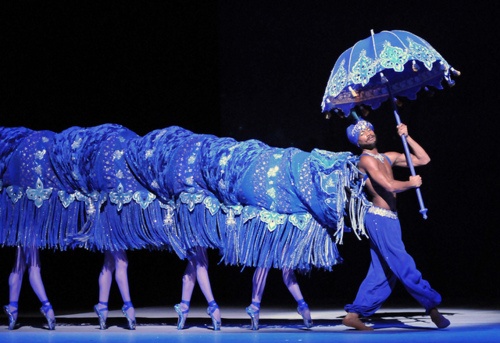
The giant blue caterpillaroid Bomoth have powerful lungs and a prodigious ability to imitate human (and alien) voices and musical instruments. Their syncopated, improvisational Bomoth Jook has made them the stars of musical venues high and low among the Strange Stars.

Here's just a few of the tunes that make up the Jook:


I used "Hello Dolly" in a Strange Stars game at a convention!  Did my best Louie Armstrong imitation ever, in fact.

Here's another popular one:


And now that your feeling your hyperspace nodes:


Nodes in hand, one more for the road:


Thursday, October 22, 2015

Strange Stars A-To-Z: "I" Is For Index


The Index is list of memes and memeplexes that the Instrumentality of Aom has determined are harmful to sophonts. In systems under their sway, the Instrumentlity monitors the local Metascape for these toxic memes in order to isolate, contain, and remove them from circulation.

While the Instrumentality is a proselytizing religion with expansionist ambitions, its syncretic practice of local orthodoxy emphasizes the importance of incorporating local beliefs and traditions rather than eliminating them. The Instrumentality is far more concerned with indexing and eliminating memeplexes that challenge Instrumentality doctrine or authority, undermine authority and order more generally, or promote anarchy, terror, and deviance.

Memeplexes on the Index vary from system to system, but most local instances of Index activity target:
  • Aurogov personal improvement software, Aurogov Reps, and associated virtualities
  • Information and virtualities featuring the Zurr, their artifacts, and beliefs
  • Information on the Algosian torture cult, and the virtualities and clubs they frequent
  • S'ta Zoku (Star Folk) meet-up and party virtualities
  • Software for rapid evolution of radically new clades - particularly those that subvert chordate anatomy or sophont cognitive integrity
  • The Eden Seeker heresy 
  • Star charts featuring space anomalies
  • Anything on the Necromancers
  • Catalogs and descriptions of Tenebraean artifacts
  • Information on The Slavers, and the virtualities and habitats that serve as their slave markets
  • Information on the Sisterhood of Morrgna, their world, associated devices, and practices
  • Information on Sirius A and B, Sraad music, poetry, and intership communications
  • Dramas sensationalizing or romanticising the crimes of the Pharesmid SyndicateZao Corsairs and similar pirate brethren, and other terrorists (although such stories and virtualities are extremely popular and hard to stamp out)
  • So-called "adult entertainment" virtualities featuring Hwuru and Thrax

Wednesday, October 21, 2015

Strange Stars A-To-Z: "H" Is For High House

Illustration by John Howe


The High House 

Wing there with me

The high place, the infinite space

The only structure built into hyperspace 

What node does it thread? What race built it? Who lives there now - 

Among its many rooms?

We know it's real 

(we think) 

Because the feathered Hyehoon 

Of quick-clawed Omu 

Say they've been there 

They call it Marao's House 

Wing with me there


We've loved the title of James Stoddard's The High House for a long time, so hopefully he's OK with another even higher (hyper?) house.